Abysse of Intelligence started the way most study groups start: three of us, one table, the same failure. We read the chapter, we highlighted it, we felt ready — and we lost points on things we were sure we knew.
The embarrassing part was also the useful part. The methods that work were already published, tested and free. Spaced retrieval. Retrieval before rereading. Practice that is slightly too hard. We were not short of information. We were short of a written procedure and a way to check it.
So we stopped inventing. We took each method to its source, kept what the evidence supports, and cut everything that needs a subscription, an app, or a good week to start.
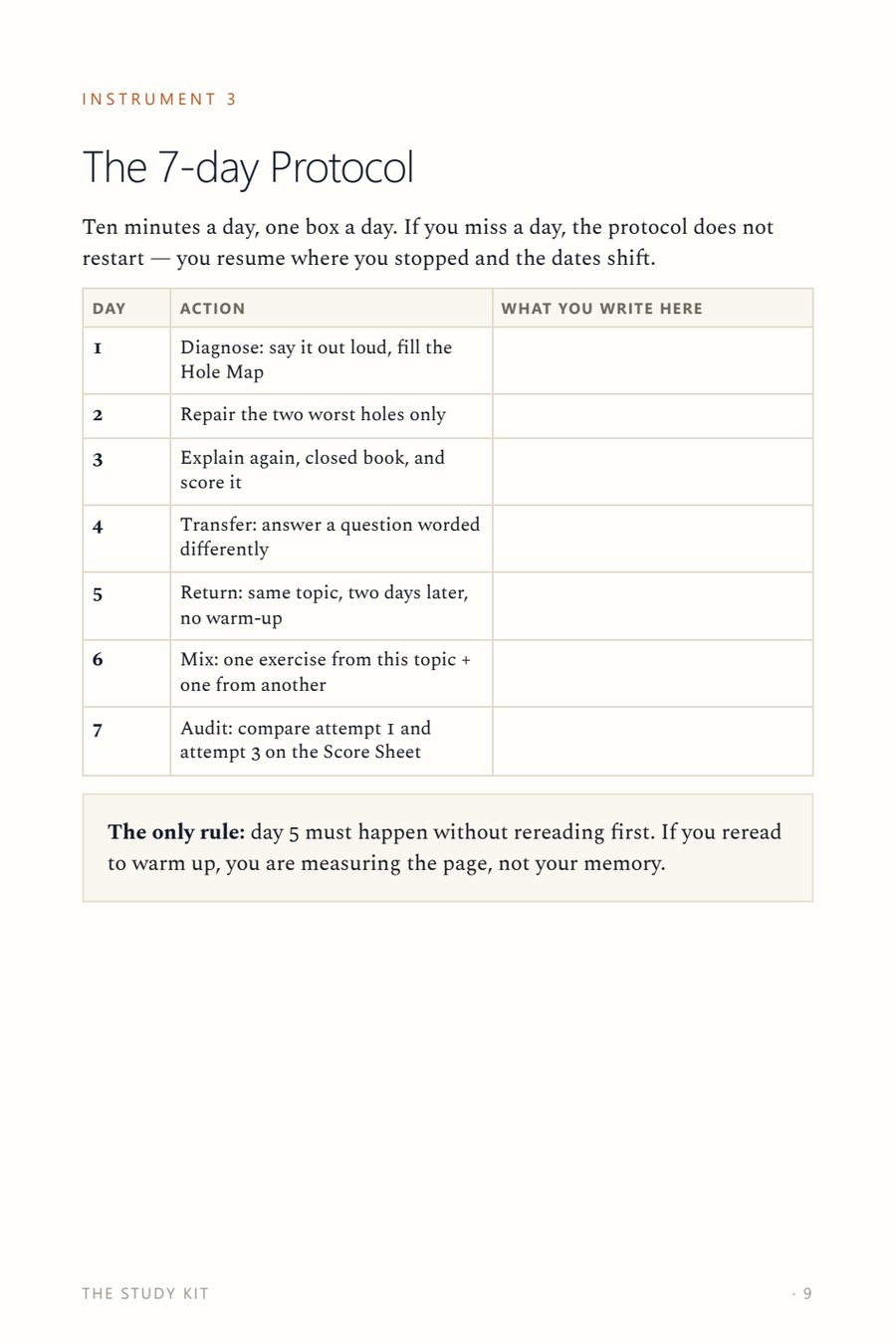
Then we added the part nobody sells: the sheet where you write the gap down, the score line where three attempts sit side by side, and the date that makes the whole thing arguable.
Why? Because our own marks are the reason we started, and we would rather fix them with a procedure than with hope. That is the honest version of the name: we borrow the wheel, we adapt it to us, we try to make it better, and we say where it came from — every time, on the page.
“We are not smarter than the researchers. We are simply finished with improvising.”